
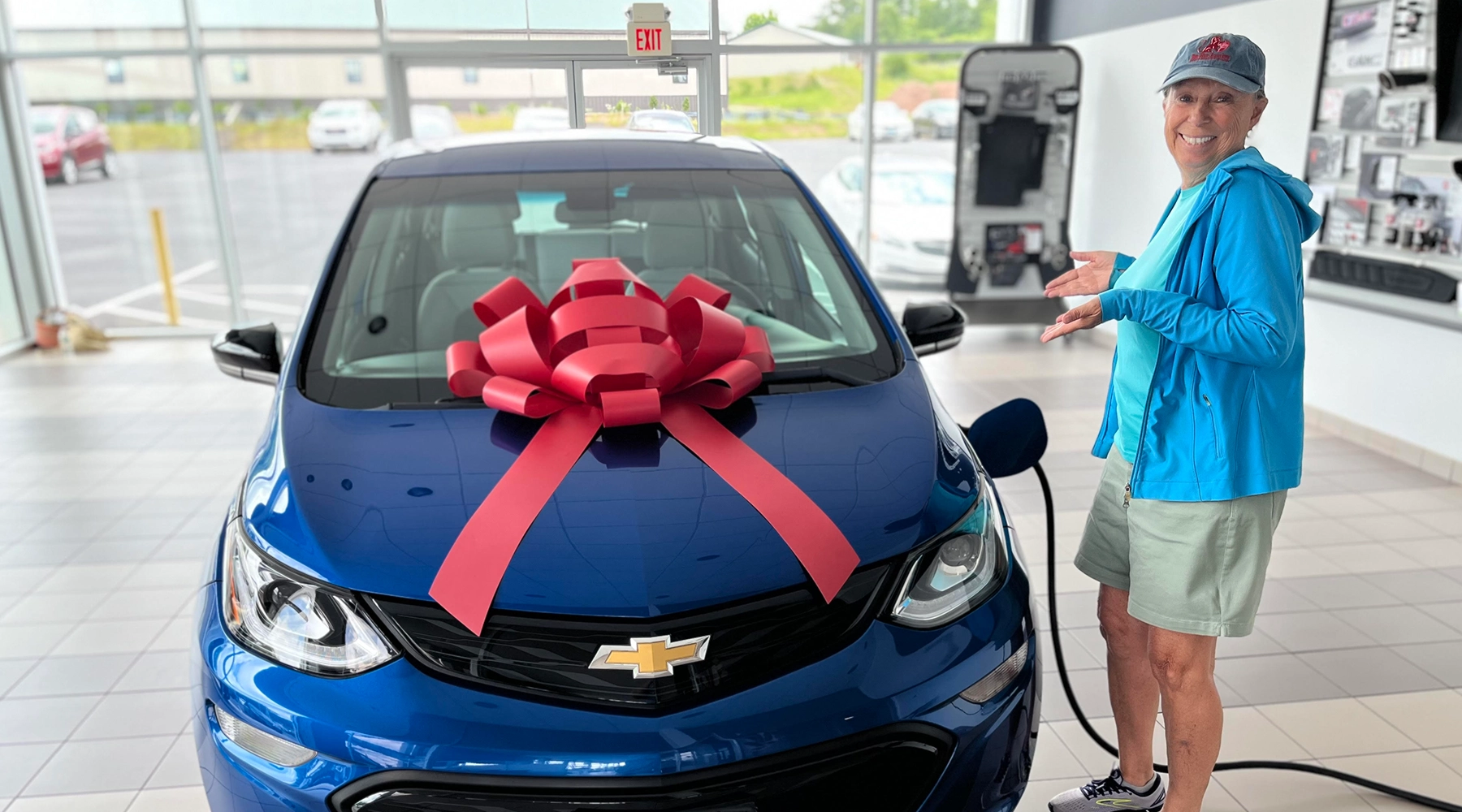
Photo Caption: Gen180 EV Ambassador Carolyn shows off her used Chevy Bolt.
Headlines across the auto industry have lately painted a familiar story: demand for new electric vehicles is cooling. With federal incentives gone and pricing still volatile, it’s easy to misconstrue short-term bumps as long-term stalling. But beneath the surface of new-car sales lies a far more compelling truth, one that holds enormous opportunity for everyday Americans and for the climate alike.
What many Americans are missing is that the real EV revolution isn’t over–it’s just entering its next, more accessible phase: the used electric vehicle market is about to heat up in a way we’ve never seen before.
A wave of choices are about to hit the market
Over the past few years, a surge in leases, many driven by federal incentives that made EVs more affordable, has significantly expanded EV adoption. With three-year leases ending in the coming months, a robust inventory of EVs is poised to come onto the secondary market. More than 300,000 EVs are expected to return from lease in 2026, which is an increase of more than 200% from 2025.
That means millions of previously hard-to-find EVs, from Hyundai Ioniqs to VW ID.4s and Mustang Mach-Es, will soon show up on dealer lots, certified pre-owned programs, and peer-to-peer markets. This isn’t a trickle; it’s a surge in the supply of used electric vehicles that will give buyers affordable choices they’ve never had before.

Affordability matters more than ever
Today’s consumers are feeling every dollar of inflation, interest rate pressure, and rising living costs. Car ownership, both new and used, has traditionally been one of the largest household expenses. In 2024, every US household spent an average of $5,530 on energy, with more than half going to pay for gasoline. The impending influx of used, low mileage EVs could change that dynamic. In recent years, EV costs have fallen up to 40%, making many models cost competitive to used gas-powered vehicles.
As supply grows, prices for quality pre-owned EVs are expected to become more competitive, making them far more attainable for families and commuters alike. That’s good news not just for wallets, but for equity: expanding access to lower-cost EVs helps ensure that the benefits of electrified transportation aren’t limited to high-income buyers.
The choice matters. When buyers can compare models, features, and price points, and when they can pick an EV that fits their budget, adoption accelerates. And with more affordable EVs comes broader participation in the economic and climate benefits they deliver: lower operating costs, reduced exposure to volatile gas prices, and the opportunity to reduce transportation emissions at scale.
This isn’t just a market shift, it’s a climate opportunity
From a climate perspective, used EVs are a win-win-win. Every EV added to the road, whether new or used, displaces tailpipe emissions and advances our collective progress toward cleaner air and a more stable climate. By unlocking access to pre-owned EVs, we help communities that have historically been underserved by clean mobility options leapfrog into cleaner, more cost-effective transportation. Instead of lamenting slower new EV sales or short-term incentives lapsing, we should be preparing for this next phase of electrification: one defined by choice, accessibility, and real-world impact.

Americans want electric vehicles
For policymakers, this moment underscores the value of supporting the continued build out of public EV charging infrastructure, from robust consumer protections and battery health transparency, to financing solutions that make total cost of ownership tangible and fair. For dealers and marketplaces, it signals the importance of readying inventory, data tools, and educational resources that build confidence among used-car buyers.
And for consumers? The message is clear: a more vibrant, diverse, and affordable electric vehicle market is on the horizon. Now is the time to pay attention, explore your options, and consider how electric mobility can fit not just into tomorrow’s plans, but into today’s budgets.
The EV transition isn’t over, it’s evolving into a new, more inclusive chapter. And that’s something we should all be excited about.
Stuart Gardner is the Executive Director of Generation180, a national clean energy nonprofit in Charlottesville, VA. Stuart is an Advisory Board Member of Electrifying Virginia and recipient of Plug In America’s EV Advocate of the Year 2025. Originally from North Carolina, Stuart is a car enthusiast, passionate about creating sustainable and healthy communities. Prior to joining Generation180 he led go-to-market strategy, product development, and launch campaign planning in the automotive industry.


