
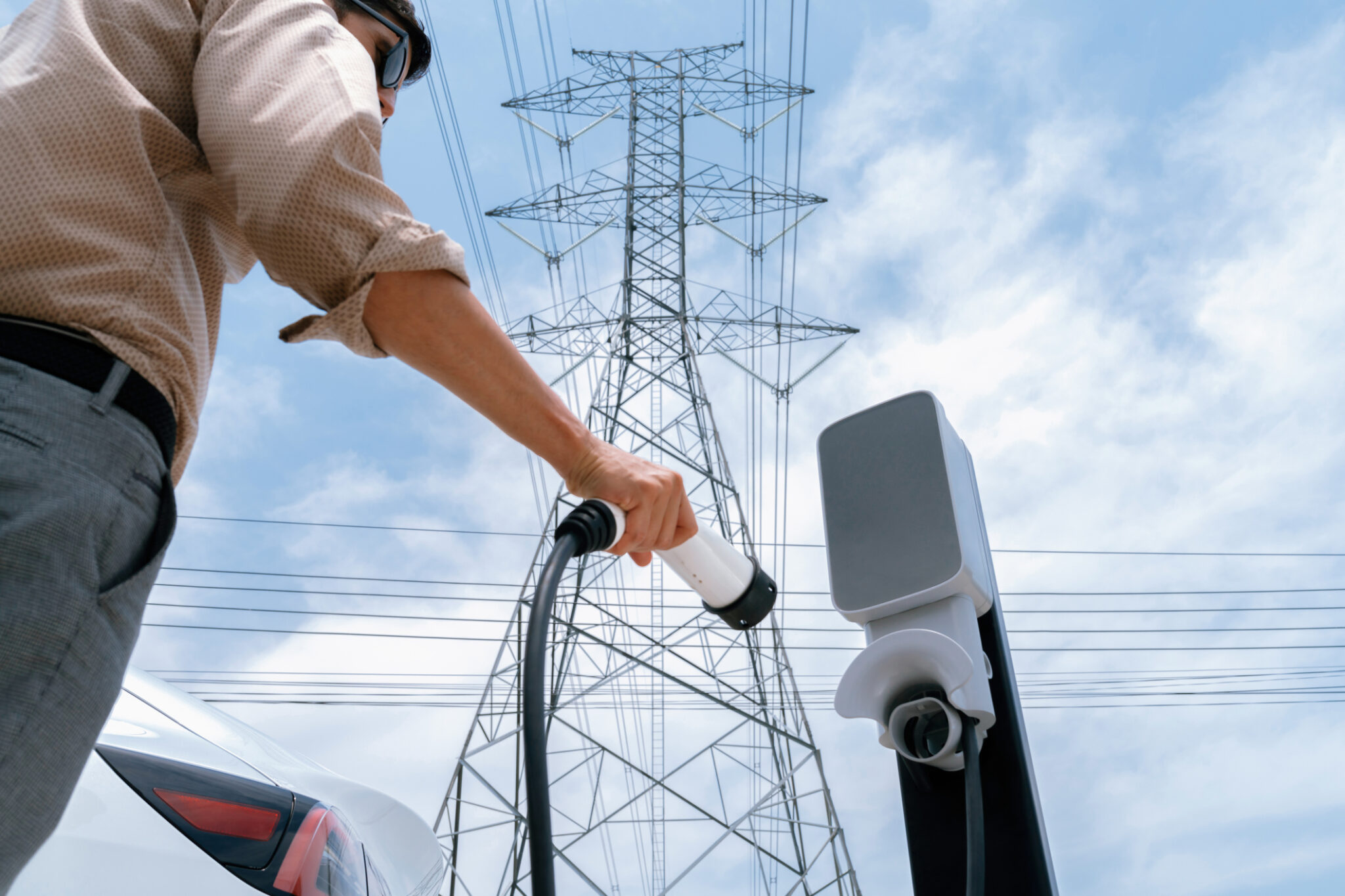
If you’ve paid a utility bill or consumed content from newspapers, podcasts, TV, or social media in recent months, you’ve probably noticed that electricity prices are rising. The American electric grid—sometimes referred to as the most complicated machine on the planet—is facing a perfect storm of aging infrastructure, increasing physical and digital threats, and new demand from sources such as data centers and the electrification of transportation and housing. As a result, the five-year forecast of U.S. utility peak load growth has increased from 24 gigawatts in 2022 to 166 gigawatts in 2025, and polling has found that electricity bills are a major source of stress for 36% of U.S. adults. However, new data and analyses of transportation electrification’s effects on the grid indicate that, with proper planning, Americans can see a future in which reliable, affordable energy is the norm.
Factors that Affect Grid Stability and Electricity Prices
Electricity pricing is complex, but its basic inputs can be summarized fairly simply; generally, utilities are allowed to charge rates that recoup their investment costs and generate a profit (Return on Equity or ROE) of around 10 percent (depending on the utility, regulatory structure, and other factors). Higher generation prices and costly upgrades to existing transmission and distribution grid infrastructure drive rates up. Policies, practices, and technologies that reduce investment costs or allow more energy to be sold using only existing infrastructure keep rates low.
There’s significant room to optimize the grid without new construction, as electricity demand fluctuates significantly throughout both the day and the year, depending on various regional factors. This leaves substantial unused capacity throughout the majority of the day; the timing of peak hours and amount of excess capacity in off-peak hours also vary by region.
Electric vehicles (EVs) are already saving ratepayers money by helping make use of this excess capacity, but smart planning by policymakers and utilities can magnify this impact, maximizing grid efficiency and minimizing construction costs. For example, utilities that adopt proactive planning tactics to anticipate the future demand for EV charging and adjust their investments accordingly can save utilities—and thereby ratepayers—billions in construction costs.
Growing EV Demand Benefits Consumers and Utilities
Unlike most new sources of electricity demand, demand from EV charging is flexible and can be shifted to off-peak times when the grid has extra capacity. Today’s EVs, like most cars, sit unused about 97% of the time. This leaves plenty of flexibility to charge off-peak without any impact on driving ability. In fact, managed charging programs at utilities such as Consumers Energy in Michigan and NC Electric Cooperatives have incentivized more than 90% off-peak charging by simply offering EV drivers lower prices during off-peak hours. This increase in the grid’s efficiency is translating to benefits for all customers. For example, Consumers Energy projects that EVs will lead to $755 million in downward rate pressure in their Michigan territory through 2031, while California utility Pacific Gas & Electric Company (PG&E) predicts that electrification will allow utilization rates on the grid to jump from 45 percent in the present day to as much as 80 percent, representing a massive boost to grid efficiency.
Between 2011 and 2021, the addition of EVs’ flexible load to the grid delivered $3.115 billion in cumulative savings to all ratepayers (not just those with an EV), and since then, the number of EVs on the roads has more than doubled. As bidirectional charging—technology that allows an EV to discharge power to the grid or to a home—is integrated into more new vehicles, EVs’ rate-stabilizing benefits are being joined by several additional, more personal benefits; EVs are already being deployed as life-saving backup power during grid outages and studies and pilot programs in the U.S., U.K., and elsewhere have proven EVs’ potential to generate revenue by charging during off-peak hours while rates are low and discharging back into the grid at peak hours, when rates are high. So, by serving as flexible, utilization-increasing demand, as life-saving backup power, or as grid-integrated battery storage, EVs bolster grid reliability and resilience, keep rates low, and may begin to generate revenue while unused.
Sources of New Demand and their Impact
Most analysts predict that, to keep up with projected demand, the grid will have to expand significantly faster in the coming years than its historic 70-year average growth rate of 3.2%. Much of the projected increase in demand—including all of data centers’ 24/7 load—is inflexible, which necessitates the costly addition of generation, transmission, and distribution capacity. The Institute for Energy Research estimates that data centers will account for 90 of the 166 gigawatts of total expected peak load growth, manufacturing will contribute another 30 GW, and the combined electrification of building, transportation, mining, and other loads will account for the remaining 46 GW. Other studies have shown similar results. McKinsey estimates that data centers will generate more than 40% of North American electricity consumption growth by 2050, with 20-29% of growth coming from industry, 10-19% from hydrogen production, another 10-19% from transportation electrification, and less than 10% from building electrification.
While adapting the grid to handle this new load won’t be simple, those who claim that the grid simply can’t grow fast enough to handle transportation electrification are wrong. If all new cars sold were EVs by 2035, electricity demand would only rise about 1% annually—well below the historic 3.2% average growth rate of the grid. Though the pessimism is misguided, the respect for electrification’s transformative potential is not.
Policies and Programs to Optimize EV-Grid Integration
The introduction of so many large batteries to American streets represents a paradigm-shifting opportunity. Recognizing the inevitability of—and opportunities created by—accelerating EV deployment, policymakers and utility commissioners should focus on passing policies and implementing programs and technologies that facilitate an efficient and synergistic integration of EVs into the grid.
Countless examples of such programs already exist throughout the country, providing a robust set of programs and policymakers for decision-makers to draw upon. These include:
- EV-specific rates, like Duquesne Light Company’s incentive rates for commercial customers and Indiana Michigan Power’s EV time-of-use rate and rebate;
- Managed charging programs, like Duke Energy’s residential managed charging for EV owners and Randolph Electric Co-op’s REVUP managed charging incentive;
- V2G pilot programs, like Baltimore Gas & Electric’s residential V2G pilot and Nuvve and ComEd’s electric school bus V2G pilot; and
- Reforms that reduce barriers to charging infrastructure deployment, such as Orlando’s streamlined process for charging infrastructure permitting, or Atlanta’s 2025 EV Readiness Ordinance, which mandates the inclusion of EV charging infrastructure in new construction and major renovations.
For detailed dives into these topics, view the EC’s:
- AchiEVe Policy Guides for EV Charging and Access to E-Mobility
- Electrifying Transportation in Municipalities policy guide
- Resource on EV charging permitting processes and building codes
- Blog on using an EV as backup power during emergencies
- Webinar on working with utilities to support electrification
- And more
With smart, proactive planning by policymakers and utilities, EVs have the potential to redefine what the grid is capable of, but we don’t have to wait to see EVs positively impact the grid—they’re already bolstering its stability and delivering ratepayers billions in savings.