Key Findings
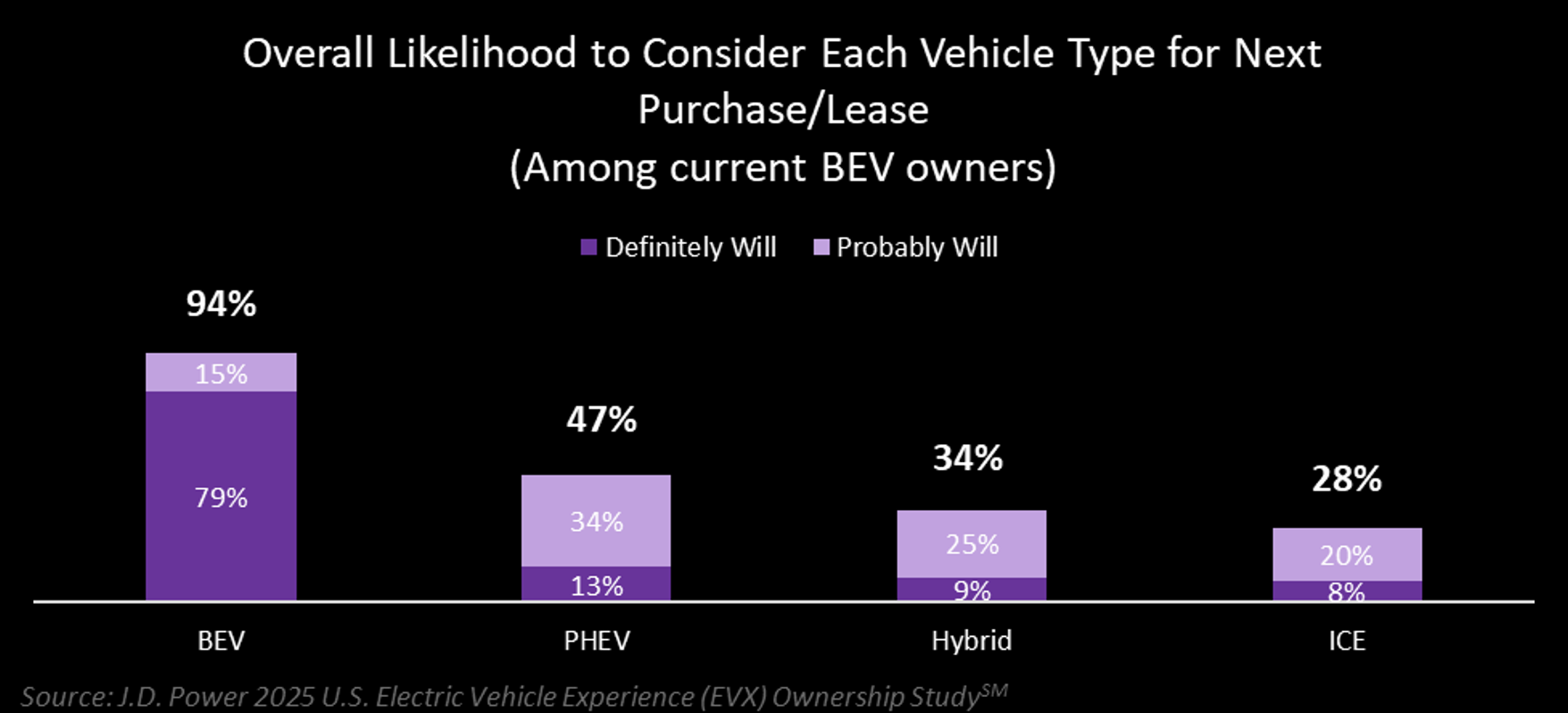
- Returning EV Lessees Double-Down on New EVs: A total of 243,000 franchise EV leases[1] will come to an end in 2026, more than three times the volume of EV lease returns in 2025. Based on the behavior of returning franchise EV lessees in 2025, 62% replace their vehicles with new EVs. Among current EV owners, 94% say they “definitely will” (79%) or “probably will” (15%) consider an EV for their next purchase or lease.
- EV Consideration Surges in October: The percentage of active new-vehicle shoppers who say they are “very likely” to consider buying or leasing an EV in the next 12 months increased to 24.2% in October, up from 21.6% in September. This is the highest level of EV consideration since January 2025.
- Lower Cost of Ownership is Top EV Purchase Driver: The number one reason EV owners select an EV over a gasoline-powered vehicle is expected lower running costs. In the majority of cases (86%), EVs end up delivering on that expectation.
Executive Summary
Consumer response to the repeal of the $7,500 EV tax credit has been swift and dramatic. For the month of October 2025, the first full month following the expiration of the federal incentive program, EV sales plummeted by 53% and now represent just 6.0% of total monthly new vehicle sales, down from 12.9% in September.
The big question now is whether that decline represents a true shift in consumer sentiment away from EVs or more of a rebound-effect following several months of surging sales as new-car shoppers raced to take advantage of the tax credits while they were still available.
Based on J.D. Power data, which captures both real-world sales and lease volumes, and consumer sentiment and ownership experience data among current and prospective EV buyers, the future of EV demand in the United States is a bit more nuanced. While the end of the EV tax credit will significantly affect EV sales volumes over the next several months, the bottom will not fall out of the EV market.
This E-Vision Intelligence Report dives into key data points gathered from J.D. Power studies and proprietary market data, to offer a data-driven consumer perspective on the EV customer experience.
Current EV Owners Still Hooked on EVs
One variable that’s been largely absent from recent analyses of EV demand has been the loyalty to EVs among current EV lessees. The data suggests that a significant number of current EV owners will be back in the market for a new car within the next year, and the majority of them plan to get another EV.
The 2025 U.S. Electric Vehicle Experience (EVX) Ownership Study found that 94% of current EV owners say they “definitely will” (79%) or “probably will” (15%) consider an EV for their next purchase or lease. Furthermore, 243,000 franchise EV leases will come to an end in 2026, putting those customers back into the market for a new vehicle. According to J.D. Power data, 62% of returning franchise EV owners in 2025 chose to purchase or lease another EV.
EV Consideration Rates Climb in October
Consumers currently planning to purchase or lease a new vehicle in the next 12 months appear undeterred by the end of the EV tax credit. More than half (59.7%) of new-vehicle shoppers say they are “very likely” (24.2%) or “somewhat likely” (35.5%) to consider buying an EV in the next 12 months. The number of shoppers who are ”very likely” to consider an EV is up 2.6 percentage points from September and is now at its highest level since January.
EVs Deliver on Promise to Consumers
Another important variable in the longer-term health of the EV market is customer satisfaction. According to J.D. Power data, the top five reasons current EV owners give for selecting an EV are expected lower running costs (57%), tax credits/incentives (51%), driving performance (48%), purchase price/lease offer (47%), and model design and styling (35%). While the end of the federal tax credit will certainly affect that value equation, it is important to note that EVs have consistently met or exceeded owners’ expectations on running costs.
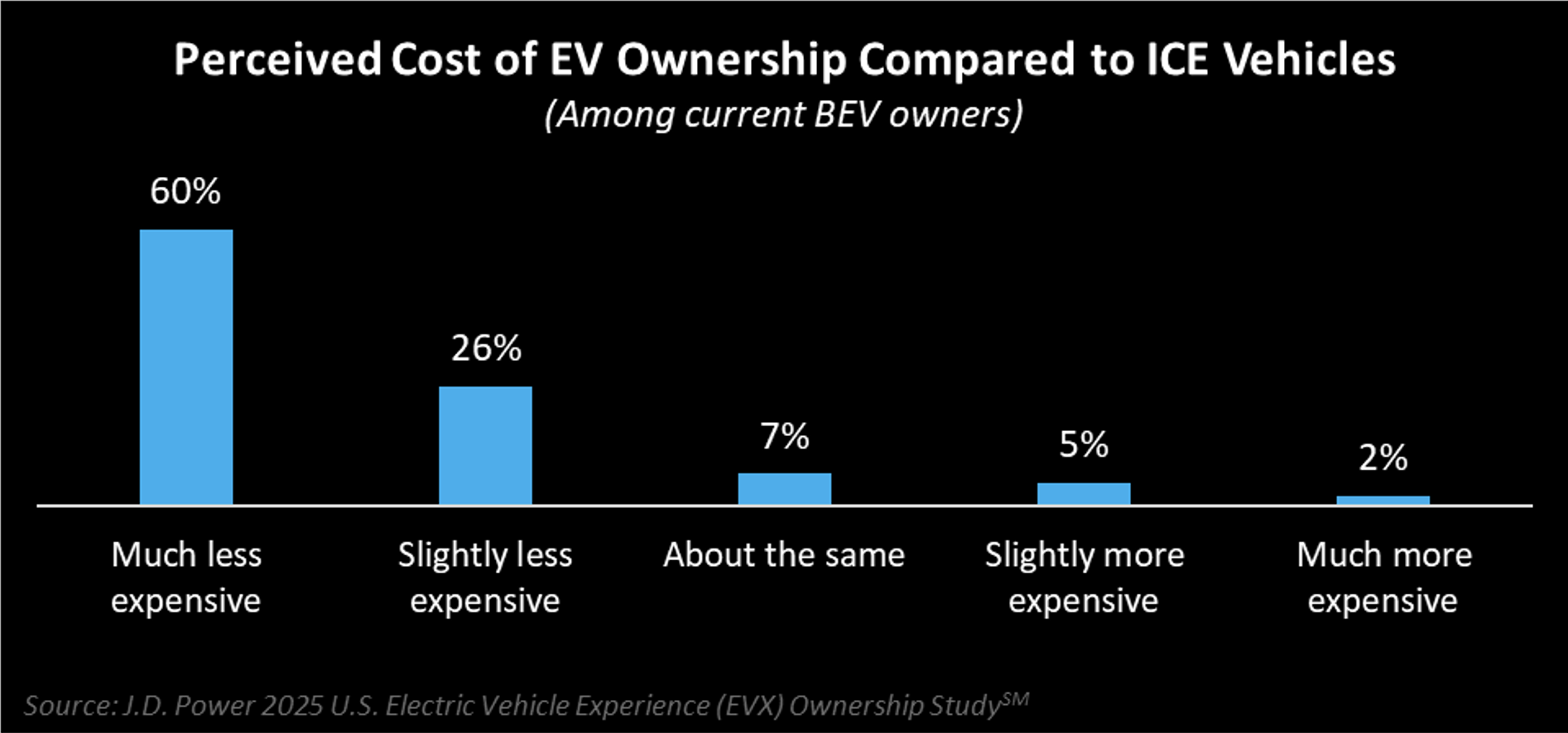
Among current EV owners, 60% say their vehicles are much less expensive to own than gasoline-powered vehicles, and another 26% say they are slightly less expensive to own and operate. Just 7% of current EV owners say they are more expensive.
Methodology
This J.D. Power E-Vision Intelligence Report is based on data and insights from the J.D. Power 2025 U.S. Electric Vehicle Experience (EVX) Ownership Study, the J.D. Power 2025 U.S. Electric Vehicle Experience (EVX) Public Charging Study, the EV Volumes Country Share Tracker, and the J.D. Power 2025 U.S. Electric Vehicle Consideration (EVC) Study.
Find out More
This report was authored by Brent Gruber, executive director, electric vehicle practice. The J.D. Power E-Vision initiative is a company-wide program focused on maximizing J.D. Power industry-leading EV data, analytics, insights and solutions. Please contact us at the numbers below to connect with Mr. Gruber or to learn more about the underlying research.
Media Contacts
Shane Smith; East Coast; 424-903-3665; ssmith@pacificcommunicationsgroup.com
Joe LaMuraglia, J.D. Power; East Coast; 714-621-6224; media.relations@jdpa.com